
23 October 2026 · zakupki-expert.moscow editorial team
Describe the symptom without deciding the cause in advance
“The goods are defective” offers little help to a technical examination. It is much more useful to identify which unit stopped performing which function, when and during what actions. For example, record an observed event, not simply “does not work”: the device powers on, starts up and stops with a specific message. Leave the cause open until verification.
Discovery and occurrence of a defect are different moments. It may have existed earlier, appeared under a particular load or arisen after handover. Documents, traces on the object and operating data help distinguish these possibilities. One date in a record does not automatically establish the defect's origin or a supply participant's responsibility.
Link the defect to a specific delivery
Retain the contract, item specification, handover and acceptance documents, product passports, instructions, completeness and marking details. Link each observation to a serial number, batch or other stable identifier. For similar products, use a register with a row per unit: handover date, start of use, observed symptom and current location.
Photographs taken at receipt and unpacking are useful: they show packaging condition, visible damage and the set supplied at that time. If original photographs are missing, do not replace them with later staged images. State what information is absent and what is supported by a delivery note, record, log or the equipment's own readings.
Collect the history between acceptance and discovery
The expert needs more than days of actual operation. Storage, movement, installation and preparation for start-up can also affect the goods' condition. Reconstruct events from available documents. Distinguish facts known with certainty from circumstances reconstructed from staff accounts; this helps assess the reliability of the input data.
- Where and how the goods were stored, and when moved or unpacked.
- Who installed, connected and commissioned it, and what records were made.
- What operating modes, loads, materials and consumables were used.
- When servicing, adjustment, updating or parts replacement took place.
- Whether similar symptoms appeared in other units from the same batch.
- What actions were taken after the defect was first discovered.
Retain original logs, not just selected entries. For electronic records, state the export source, period and device time. If the equipment clock was slow, record the known difference without silently changing dates in the original file. Keep a working event table separate from the originals.
Record the condition before repair
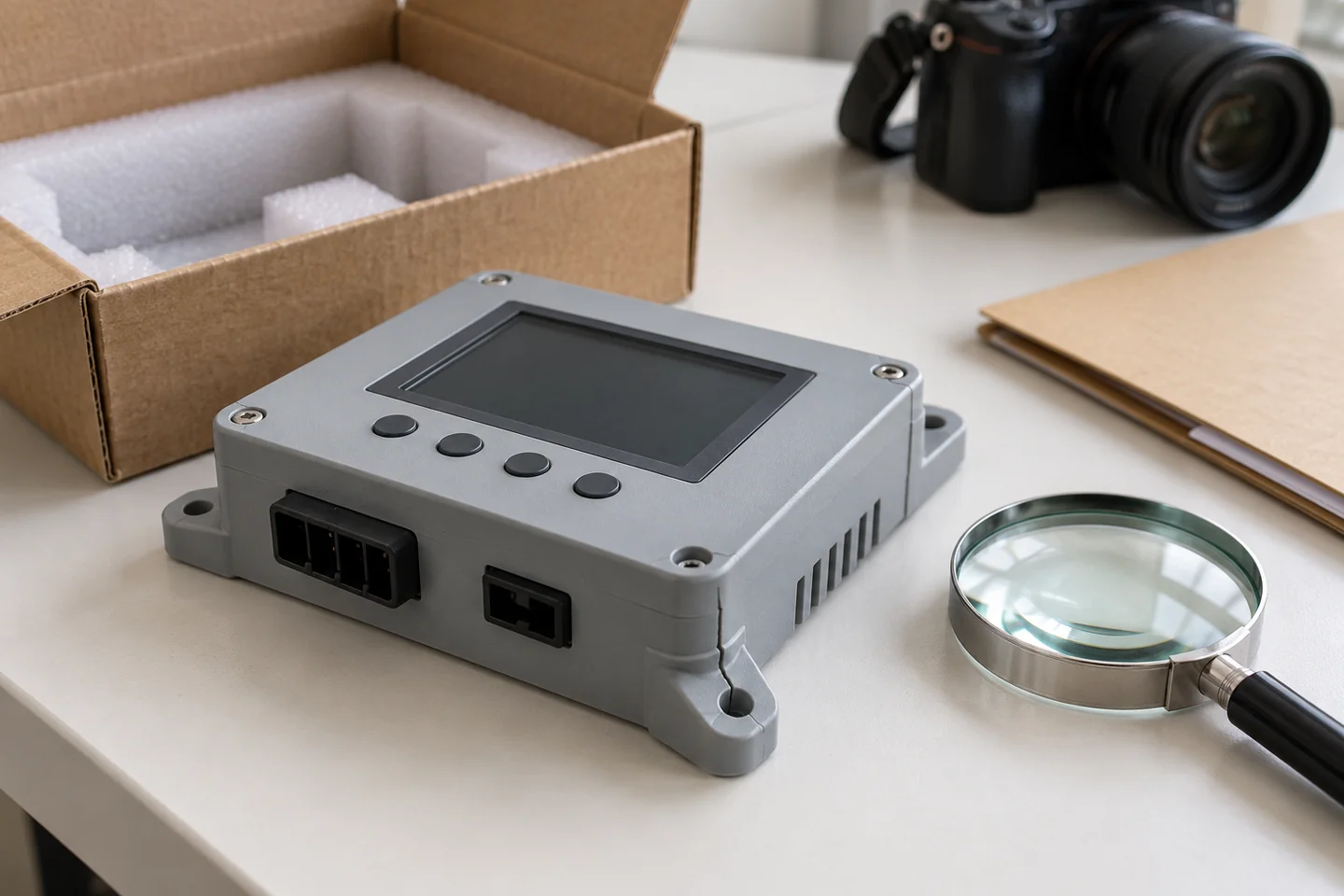
If safe, photograph the overall product, marking and defect before its condition changes. Start with a wide view showing the location and relative positions, then a close-up of the damage. Place any scale reference beside the object in the same plane. Do not draw in details or keep the sole copy only in a messenger.
Do not continue unsafe operation for the sake of video. Stop work if people are threatened or there are signs of fire or structural failure, and contact the appropriate specialists. Record why urgent action was needed, who performed it and what was documented. Removing danger takes priority over keeping the product unchanged.
If the goods have already been repaired, request the work order, diagnostic record, operations list and replaced parts list. Where possible and safe, retain removed parts with origin and handover records. A photograph of a replaced part unlinked to a specific unit has less value than a consistently documented history.
Arrange a batch examination
For widespread symptoms, list all known cases and separately identify the units actually examined. Comparison with working goods from the same delivery can help, but requires comparable operating conditions. Goods are not all identical simply because they share a delivery note: production dates, versions and use may differ.
Agree sampling, storage and testing procedures before dispatch. For destructive examinations, documenting the original condition and extent of intervention is especially important. Legal steps, notices and deadlines are checked separately against the contract and applicable procurement framework; the technical materials list does not replace them.
Questions for a technical examination
- What defects do the submitted units have and how do they manifest?
- What are their likely formation mechanisms, and what signs support the conclusion?
- Do the materials allow the defect's occurrence to be dated relative to handover?
- Could the established storage, installation or operating conditions have contributed to its appearance?
- Are the examined samples sufficient for conclusions about the submitted batch?
Before contacting us, compile one list of files and objects. Note which originals remain, where the goods are and what has already changed. This allows the feasibility of examination to be assessed and verifiable questions to be chosen, without promising to reconstruct circumstances whose traces are lost.